




On this page
Quick Answer
Stick to colorful foliage that can survive the climate and won’t drop leaves in the pool.
When your clients say they want a tropical oasis, what are they envisioning? Maybe they see a tranquil water feature, warm breeze and, of course, some lush and colorful foliage.
You can bring this vision to life for your pool clients by installing a variety of plants. The right foliage can really transform the pool area.
But with so many plant choices, where do you start?
There are some varieties that are better suited for pools because of features like their colors and planting requirements. And there are others that will cause more problems for the pool area than they are worth.
Here’s a look at what plants you should — and shouldn’t — install around a pool area.
Best Plants to Install
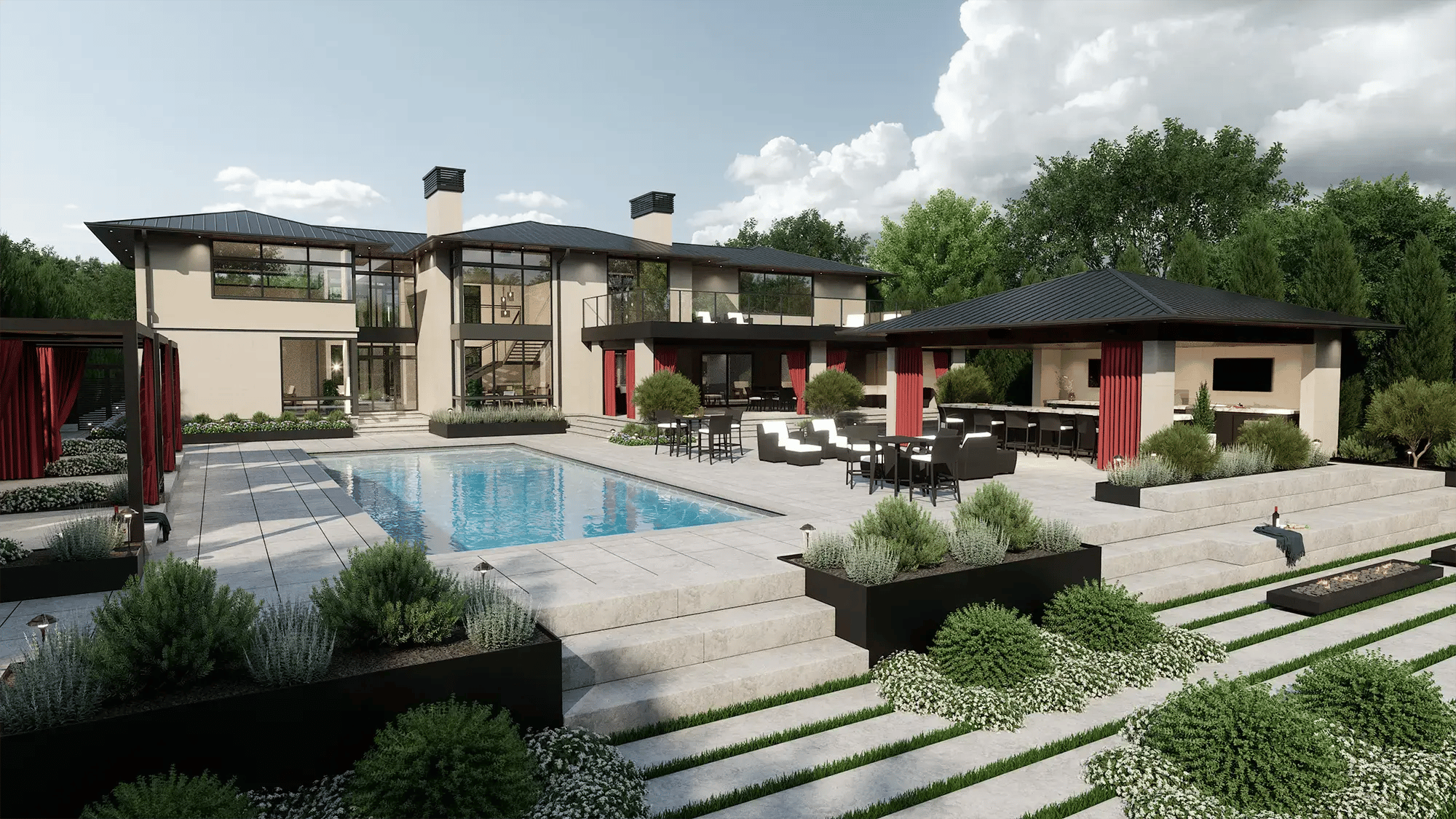
Pools and the surrounding landscape should create a relaxing, luxurious space where your customers can relax and entertain. You need to use the right plants in your design to achieve that tropical feel and wow your prospect.
Different types of flowers and foliage can be used to create a variety of looks, whether that’s a tropical oasis, southwest-inspired pool or modern retreat. Show clients you understand their lifestyle and pool visions by choosing the right plants.
Install plants with these three traits:
- Bring color
- Create privacy
- Add texture
Colorful, lush plants will really transform the pool area into an oasis. There are a variety of full-sun perennials that will provide color, such as windflowers and day lilies. Perennials won’t die after flowering, so the homeowner won’t have to worry about cleaning up after them.
Beyond adding color, you can also use plants to create a sense of privacy around the pool.
Plants like bamboo, palm trees and hedges can create a natural fence to enclose the space and even create some shade.
You also want to use a mix of plants to add texture to the landscape around the pool. Combining ornamental grasses, cactuses, flowering plants and other foliage will really help the design pop.
To add the most texture to the beds, create layers with different sizes and styles of plants. Install a variety of plant types, like combining grasses with leafy and flowering varieties.
Place the taller plants in the back or middle of the bed, and tier the plants forward in height toward the edges of the bed. Stagger the plants — instead of putting them in rows — to create a more intriguing, textured appearance. You should use at least three of each plant, unless it’s a large focal point like a tree, and group them in odd numbers.
You’ll want to use plants that are native to your zone, but here are 23 examples of foliage that are lower-litter choices for a pool area, according to the Arizona Municipal Water Users Association and LandscapingNetwork.com:
Trees
- Southern live oak (Quercus virginiana): Zones 7B–10B
- Queen palm (Syagrus romanzoffiana): Zones 9B-11
- Mexican blue palm (Brahea armata): Zones 8-11
Shrubs
- Red justicia (Justicia candicans): Zone 9
- Weeping dalea (Dalea versicolor v. sessilis): Zones 8-10
- Desert lavender (Hyptis emoryi): Zone 9b
- Golden euonymus (Euonymus japonicus ‘Aureomarginatus’): Zones 6-9
- Texas sage (Leucophyllum frutescens): Zones 8–11
- Hop bush (Dodonaea viscosa): Zones 9–11
- Blue bells (Eremophila hygrophana): Zone 9 (to about 20°F)
Succulents/Accents
- Octopus agave (Agave vilmoriniana): Zones 9-11
- Bird of paradise (Strelitzia reginae): Zones 10–11
- Pale-leaf yucca (Yucca pallida): Zone 7
Perennials
- Blackfoot daisy (Melampodium leucanthum): Zones 5-10
- Midknight blue agapanthus (Agapanthus x ‘Monmid’): Zones 6-11
- Fortnight lily (Dietes iridioides): Zones 8B-11
- Angelita daisy (Tetraneuris acaulis): Zone 8 (to about 10°F)
Ornamental Grasses
- Gulf muhly (Muhlenbergia capillaris): Zones 7-11
- Deer grass (Muhlenbergia rigens): Zones 7–11
Groundcovers
- Miss Huff hardy lantana (Lantana camara ‘Miss Huff’): Zones 7-11
- Yellow dot (Wedelia trilobata): Zones 8B-11 (invasive in Florida; check your local invasive-species list)
- Azure bush germander (Teucrium fruticans ‘Azureum’): Zones 8-9
- Damianita (Chrysactinia mexicana): Zone 7 (to about 0°F)
Live oak and queen palm still drop leaves, acorns or fruit, so plant them well back from the water.
Poolside plant picks at a glance
| Plant (from post) | Hardiness (verified) | Mature size | Litter / skimmer risk | Salt notes (spray proxy only) | Cautions |
|---|---|---|---|---|---|
Southern live oak (Quercus virginiana) | Zones 7B–10B | 60–80 ft tall, 60–120 ft spread | Leaves and acorns are "a litter problem" . Drops leaves, catkins and acorns | High aerosol salt tolerance | Forms large surface roots that lift sidewalks, curbs and driveways . Large sites only |
Queen palm (Syagrus romanzoffiana) | Zone 9B and warmer (>25°F) | Up to 50 ft, 20–25 ft spread | Fruit drop is "a major concern": clusters can top 100 lb. Not self-cleaning | Moderately tolerant of salt spray | Listed Category II invasive in central and south Florida (FISC, April 2026) |
Mexican blue palm (Brahea armata) | Hardy to about 15°F . Zone 8a with a warm microclimate | About 25 ft x 12 ft | Low . Flower stalks reach 18 ft or more | No reliable data | Thorns: medium (armed petioles) |
Red justicia (Justicia candicans) | Hardy to about 25°F, roughly zone 9b | 3 x 3 ft | Low | No reliable data | Prefers partial sun |
Weeping dalea (Dalea versicolor var. sessilis) | Hardy to about 20°F, roughly zone 9a | 3 ft x 4 ft | Low | No reliable data | Attracts bees and butterflies |
Desert lavender (Hyptis/Condea emoryi) | Hardy to about 25°F, roughly zone 9b | Up to 10 ft x 8 ft | Low | No reliable data | Attracts bees |
Golden euonymus (Euonymus japonicus 'Aureomarginatus') | Species: zones 6a–9b | Species: 10–15 ft x 5–8 ft. Cultivars vary | Showy capsule fruit | Slightly salt tolerant | Poisonous if eaten in quantity. Euonymus scale |
Octopus agave (Agave vilmoriniana) | Hardy to about 20°F, roughly zone 9a | 4 ft x 5 ft | Low | No reliable data | Soft terminal spines |
Bird of paradise (Strelitzia reginae) | Zones 10–11 | 3–4 ft x 3–4 ft | "Doesn't tend to cause leaf litter" | Light salt spray only. Poor soil-salt tolerance | Toxic to cats, dogs and horses |
Pale-leaf yucca (Yucca pallida) | Cold tolerant . Zone band not verified at extension level | Not verified | Not verified | No reliable data | Needs good drainage |
Blackfoot daisy (Melampodium leucanthum) | Zones 4a–11b | 0.5–1 ft x 1–2 ft | Low | No reliable data | None listed |
Midknight Blue agapanthus (Agapanthus 'Monmid') | Genus: zones 8a–11b . The grower rates the cultivar 6–11 | Not verified | Not verified | A. praecox is moderately salt tolerant | Sap can irritate skin and eyes |
Fortnight lily (Dietes iridioides) | Zones 8b–11 | Not verified | Not verified | No reliable data | Likes moist soil and partial shade. Needs frequent irrigation in full sun |
Gulf muhly (Muhlenbergia capillaris) | Zones 7–11 . NC State lists 5a–9b | 2–3 ft x 2–3 ft | Seed plumes persist through winter | Moderate soil-salt tolerance . Salt tolerant | Deer resistant |
Deer grass (Muhlenbergia rigens) | Hardy to about 0°F, roughly zone 7a | About 4 x 4 ft | Low | No reliable data | None listed |
Miss Huff lantana (Lantana camara 'Miss Huff') | Zones 7b–10b | 4–6 ft x 4–6 ft | Sterile cultivar, little or no fruit | Salt and salt-spray tolerant (species) | Vigorous . Leaves can irritate skin and unripe berries are poisonous . Common seeding lantana is invasive in Florida, so use sterile cultivars |
Yellow dot (Wedelia / Sphagneticola trilobata) | Zones 8B–11 | 0.5–1 ft groundcover | Low | Good soil-salt tolerance | Invasive: UF/IFAS says do not plant anywhere in Florida (FISC Category 2) |
Azure bush germander (Teucrium fruticans 'Azureum') | Zones 8–9 (grower) | 4–5 ft, can be pruned lower | Not verified | No reliable data | None verified |
Texas sage (Leucophyllum frutescens) | 8a–11b | 6 × 6 ft ; 6–12 × 6–12 ft ; check cultivar | Low ; flower flushes are not zero debris | Moderately salt tolerant; exposure type unspecified | Full/reflected sun; allergenic . Needs drainage; humidity/high night temperatures can cause problems |
Hop bush (Dodonaea viscosa) | Zones 9–11 | 10 × 8 ft ; 10–15 × 6–15 ft | Low ; papery fruit, plant back from coping | Tolerates salt spray; soil salt unknown | Evergreen screen, not non-shedding. Roots usually not a problem; not known invasive |
Damianita (Chrysactinia mexicana) | To about 0°F, ~7a; upper limit unverified | 2 × 2 ft | Low; flowers and seeds still occur | No reliable rating verified | Western Texas/low-desert edging; full/reflected sun, low water; pollinators . Native NM/TX . Not zones 5–6 |
Angelita daisy (Tetraneuris acaulis, syn. Hymenoxys acaulis) | To about 10°F, ~8a; full zone band unresolved | 1 × 1 ft | Low, not flower-debris-free | No reliable rating verified | Arizona small-space pick; full sun, low water. Match local provenance/hardiness |
Blue bells (Eremophila hygrophana) | To about 20°F, ~9a; upper limit unverified | 2 × 3 ft | Low | No reliable rating verified | Low-desert accent, not privacy; full/reflected sun, no thorns . Toxicity/root behavior unverified: no pet-safe claim. Not a Florida endorsement |
| Plant (from post) | Why it causes pool problems (source) |
|---|---|
Acacia | Sweet acacia: moderate litter, small thorns . Shoestring acacia: moderate litter |
Bougainvillea | High litter, large thorns |
Crape myrtle | Listed as messy around pools |
Ash trees | Arizona/velvet ash drops large clusters of winged seeds in late summer |
Evergreen elm (Ulmus parvifolia) | Seasonal litter. Allergenic |
Mesquite | Velvet mesquite: seasonal litter, medium thorns, allergenic |
Honeysuckle | Japanese honeysuckle is invasive in North Carolina (if this species is meant) |
Azalea, dwarf arborvitae | Kept as listed in the post. No added attributes were verified in this pass |
Hardiness zones only describe winter cold. Check the USDA zone for the site , then local invasive lists. A plant sold everywhere can be invasive in your state, as wedelia and seeding lantana are in Florida . Even "low-litter" picks need upkeep. Palms like queen palm aren't self-cleaning, and their fruit stalks should come off before they drop . Plan for the plant's mature size, not its nursery-pot size .
Climate-zone picks
- Zones 5–7 (cold winters): blackfoot daisy (4a–11b) , gulf muhly (5a–9b per NC State) , golden euonymus (6a–9b) , deer grass (to about 0°F) , Miss Huff lantana (7b–10b) , damianita (to about 0°F, ~zone 7; not zones 5–6)
- Zones 8–9 (mild winters, such as the low desert, the Gulf Coast and inland California): Mexican blue palm (8a with a warm microclimate) , fortnight lily (8b–11) , agapanthus (genus 8a–11b) , bush germander (8–9) , live oak (7B–10B, large sites only) , Texas sage (8a–11b) , angelita daisy (to about 10°F, ~8a; full zone band unresolved)
- Zones 9b–11 (frost is rare): queen palm (9B+; Listed Category II invasive in central and south Florida (FISC, April 2026)) , red justicia and desert lavender (about 25°F) , octopus agave and weeping dalea (about 20°F) , bird of paradise (10–11) , hop bush (9–11) , blue bells (to about 20°F, ~9a; upper limit unverified)
- Excluded from picks: wedelia (invasive in Florida)
How far from the pool to plant
There is no single universal setback in the sources we checked. They support these points:
- Rule of thumb for trees: UF/IFAS Extension recommends planting "at least half of the mature canopy spread away from other trees and structures," and checking species-specific guidance . Applied to the table, that means about 6 ft or more for a Mexican blue palm (12 ft wide) , about 10–13 ft or more for a queen palm (20–25 ft spread) , and about 30–60 ft or more for a live oak (60–120 ft spread) .
- Roots reach past the canopy: most tree roots are in the top 2 ft of soil and can extend well beyond the drip line . Live oak roots lift sidewalks, curbs and driveways .
- Shrubs, grasses, perennials: use the mature width from the table so plants don't overhang the coping or deck. This applies the same mature-size principle ; the sources give no pool-specific number.
- Who decides: local codes, HOA rules, the pool builder or engineer, and the project documents govern the final clearances. Treat these numbers as planning guidance only.
What to Avoid Around Pools
Not every colorful, lush plant should be used around pools, however.
Stay away from plants with these two characteristics in your next pool design:
- Drop leaves
- Thrive in the shade
You want the plants you choose to add visual interest to the space — not unwanted leaves and materials that can get in the pool.
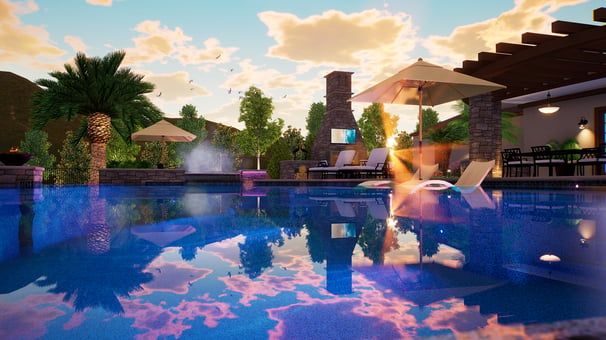
Leaves, pine needles and dead flowers can create extra work for clients if the materials land in the pool. Plus, they can clog filters. So, you should stay away from plants that drop leaves or seed heads.
Here are a few plants you should avoid using around pools because of the debris they cause:
- Acacia
- Azalea
- Bougainvillea
- Crape myrtle
- Dwarf arborvitae
- Honeysuckle
- Ash trees
- Evergreen elm
- Mesquite
You also need to make sure the plants you choose match the site’s conditions. Most pools are installed in spaces with direct sun, so the plants you use in the design should be suited for the sunlight. The space around a pool is almost like a microclimate, and the plants you use need to be able to handle it.
Salt, chlorine, roots and skimmer litter
- Chlorine splash: Clemson Extension, as quoted by the Lady Bird Johnson Wildflower Center, says normal splashing should have no effect on nearby plants. Newly shocked water is the exception . UF/IFAS adds that no plant on its poolside list can survive a deluge of chlorine or salt water .
- Saltwater pools: a typical salt-chlorine system runs at about 2,700–3,400 ppm salt (about 3,200 optimal) , against about 35,000 ppm for ocean water . Splash-out is far less salty than sea spray. No source we found rates plants for saltwater-pool splash specifically, so the "salt spray" ratings in the table are a proxy only.
- Roots, shells, decks and plumbing: large surface-rooted trees such as live oak lift paving . Roots can't crack an intact pipe, but they find and widen existing cracks and unsealed joints . That makes leak-free, properly sealed plumbing and a mature-size setback the practical defense.
- Skimmer litter: leaves, flowers, fruit and seed are the main load. Watch the high-litter species above. Queen palm fruit clusters can top 100 lb , live oak drops leaves, catkins and acorns , and bougainvillea is rated high litter . Flowering plants near the water also draw bees and wasps .
FAQ
What are the worst trees to plant near a pool?
Trees that shed heavily or root near the surface. Sources flag live oak (leaves, acorns and pavement-lifting roots) , queen palm unless fruit stalks are removed , and crape myrtle, ash, mesquite, acacia and evergreen elm for litter .
How far from a pool should you plant a tree?
UF/IFAS suggests at least half the tree's mature canopy spread from structures . Roots can extend past the drip line , so check local codes and the pool builder's guidance.
Will chlorinated pool water hurt plants?
Normal splashing shouldn't, according to Clemson Extension (via the Wildflower Center) , but no plant tolerates a deluge . Don't irrigate with freshly shocked water .
What plants are suitable around a saltwater pool?
Pool salt is about 3,200 ppm against about 35,000 ppm for seawater . Sources rate live oak (high), queen palm (moderate), gulf muhly (moderate) and lantana as salt tolerant . That is sea-spray data, so treat it as a guide.
Do tree roots damage pool plumbing?
Roots exploit existing cracks and unsealed joints rather than breaking sound pipe . Large surface-rooted trees can lift decks and paving .
What are low-maintenance poolside plants for full sun?
From this list, blackfoot daisy, deer grass, weeping dalea and octopus agave are rated low litter by AMWUA . Confirm they're hardy in your zone first .
What plants work around a pool in Arizona or Texas?
Use the zone bands above. Many plants on this list come from the Arizona Municipal Water Users Association's low-water plant list .
Plant with a Purpose
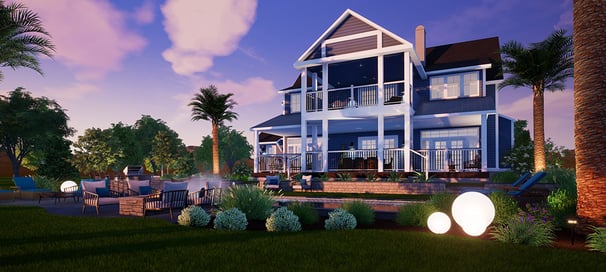
A good pool and landscape design not only looks good: It also incorporates practical, low-maintenance materials.
So when you’re adding plants around a pool, make sure they are the perfect finishing touches to the oasis experience — and not something that will cause the client headaches later on.
Stick to colorful foliage that can survive the climate and won’t drop leaves in the pool.
You can test out different plant combinations and locations using 3D pool and landscape design software like Vip3D. The software’s library has a wide range of plants to choose from, and you can also import your own plant photos into the design.
With the software, you can also incorporate other service add-ons like pool lighting and outdoor furniture to create the complete experience. These are the details that will help your customers imagine themselves in the space and move them one step closer to a signed contract.